
Red Tide and Dogs From Padre Island National Seashore 9/17/2015
By Tyler Thorsen
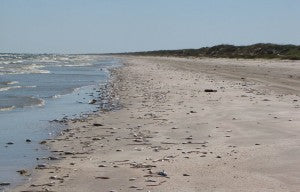 Pet owners are strongly cautioned against bringing their pet(s) onto the beach during a red tide event. Here at Padre Island National Seashore we strive to let the public know that this is a dog friendly park. However there are some times when it is not good for your pet to be on the beach. A red tide event, like the one we are experiencing right now, is not a good time for your dog to be near the shore. Below you will find some important information concerning red tide (which creates Brevetoxin) and the well being of your pet: • Brevetoxin poisoning may occur from eating or licking dead/decaying fish or other items on the beach, or by exposure to water, foam, or sand/sediment. • Clinical signs of toxin exposure can occur after very limited time on the beach (20 minutes in one case). Please keep your dog on a leash at all times. • Do not let your dog dig into the sand or pick up/lick any item from the beach, including sticks, shells, carcasses, or trash. • Do not allow your dog to drink from the surf or from pools of water on the beach. • A basket muzzle may keep your dog from picking up items from the beach, however most basket muzzles are designed to allow a dog to drink or lick, which could lead to exposure. Other muzzle types are not recommended. • If you suspect that your dog has picked up or licked any item on the beach, rinse its mouth with copious amounts of fresh water. • If you believe that your dog has swallowed or licked an item, rinse its mouth as above, keep it off the beach, and watch closely for the following signs (which usually start within 12-24 hours, sometime much sooner): -Excessive drooling -Vomiting -Lethargy or reluctance to move -Decreased appetite -Weakness in any limb or an inability to hold the head up normally -Head or body tremors, seizures, or other abnormal neurological -signs -Respiratory difficulty -Any other behaviors or physical signs that you feel are abnormal for your dog • If any of those signs appear, or if you are at all concerned, please contact a veterinarian immediately. Keep in mind that dogs showing the above signs may be ill from causes other than Brevetoxin exposure, and some of those causes can be equally serious. • There is no specific “antidote” for Brevetoxin poisoning, and there is no rapid test to detect the toxin, so veterinary care is generally supportive and may include: -Induction of vomiting (if appropriate; if certain sharp items are ingested, vomiting is NOT recommended) -Administration of a gastrointestinal toxin-binding agent -Hospitalization with intravenous fluid therapy -Intravenous or oral gastrointestinal protection medication -Anti-seizure medication and/or sedation -Testing for other causes of illness Each case is unique, and only a veterinarian can determine the appropriate course of testing and treatment for each patient. Veterinary therapy does not guarantee a successful outcome, however in most cases it greatly increases the chances of survival.
 Current Red Tide Conditions The number of fish washing ashore is growing; photos were taken first thing this morning. We are now receiving reports of mullets, sheepheads, needle fish, and eels washing ashore. Red Tide blooms can last days, weeks, or even months and can change with the weather. Fish are killed by the toxins of these Red Tide blooms, but oysters, clams, mussels, and whelks can be toxic without showing any signs. Mammals can be affected by the toxins released by the blooms. In some cases when a coyote eats fish that washed ashore it can make them sick or even may kill them. Some smaller children will be affected and even pets such as dogs because their lungs are more sensitive than others. Word of Caution during Red Tide: Adults and children with respiratory conditions, please avoid making a trip to or near the beach during Red Tide conditions. If you do decide to take the risk, carry a rescue inhaler with you. If conditions worsen for you seek shelter in an air conditioned building until the respiratory attack passes. People in general affected by the bloom may suffer from coughing, sneezing, and teary eyes; symptoms are temporary. If you still want to go swimming at beach during Red Tide, please take caution. If you start to have burning eyes and skin irritation, please get out of the water and rinse off in fresh water. It is a good idea, if your skin in easily irritated or have eczema, to avoid getting into the water during Red Tide. Also when picking your location to set up on the beach, avoid areas with numerous dead fish. Decomposing fish can increase the bacteria level in that area. You also, do not want to take a chance on stepping on a fish bone and cutting yourself, this will most likely lead to an infection. If you already have a wound it can easily get infected by the waters. Remember this is just a word of caution, and we will keep Facebook updated about the conditions of Red Tide. #RedTide (NPS Photo)
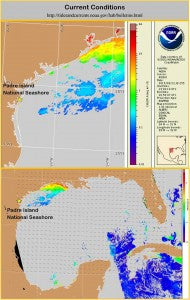 Scientifically the alga is known as Karenia brevis and the unfortunate problem with it is that waterborne toxins produced by it coat the fish’s gills and cut off their ability to extract oxygen. The result can be fish kills that in worst case scenarios can cause hundreds of thousands of dead fish along Texas beaches. A small fish kill was reported north of the park at Packery Channel late Sunday. So far the park has not experienced a fish kill. Another side effect of red tide blooms is that when concentrations reach high enough levels, the toxins in the water get aerosolized as the waves break and the wind picks it up. The resultant toxins can cause coughing and sneezing. Anyone with respiratory issues such as asthma or COPD should avoid the beach. Dogs, with their keen sense of smell can be especially sensitive. If aerosol levels are elevated enough to cause even minor breathing issues for you, you should not subject your dog to it. Park science staff are reporting elevated levels of the alga in the waters along the northern park boundary while readings a few miles south are coming in as OK. Note that the bloom is spreading from east Texas to the west and south so keep in touch with this park page for the latest updates so that you can make the best decisions about your visit. If conditions worsen, additional information will be posted.
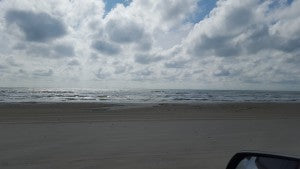
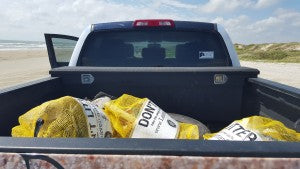
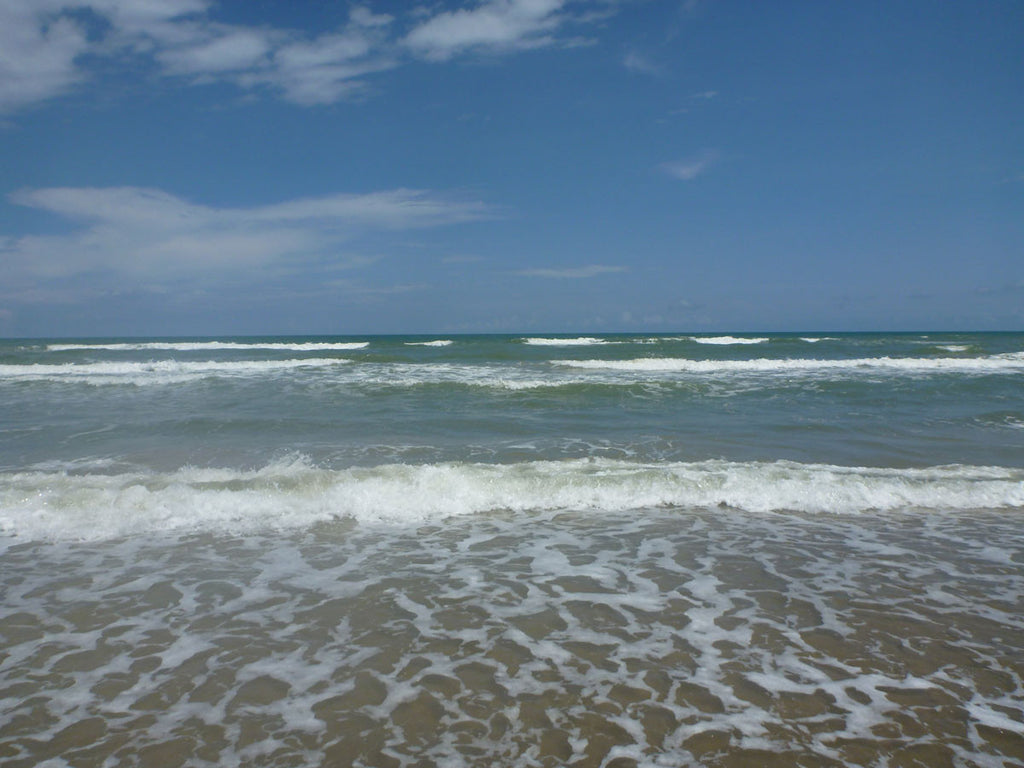
 Water temperatures were warm from one end of the beach to the other. Finger Mullet and Pony Mullet were observed from the 28 mi. beach to the 38 mile. Squalls passed to the North and the South of us and the forecast SE winds were actually out of the due East. Occasional small Whiting and lots of Hardhead catfish were the only fish encountered; although fisherman at the jetty said they had caught one small Blacktipped shark. Pelicans were observed feeding offshore in the Little Shell and the North end of the Big Shell. No anchovies were encountered and the numbers of Black Terns were dramatically decreased from the thousands of a few days ago. Those Black Terns are with the anchovies; wherever that may be. We have had extremely high tides and more are forecast for this week. Driving is 2 wheel drive all the way to the jetties as long as you avoid the high tide phases. There is a large washout around the 50 mile and we were told it must be crossed “out front” on low level tides as going high towards the dunes is undoable. Overall bird numbers were noticeably down but the first birds of the season were observed for several species. These include 22 Red Knots, 1 Wimbrel, 2 Tri-colored Herons, Semi-palmated Plover, 7 Ring-billed Gulls and 6 Common Terns. Other species observed included 14 Long-billed Curlews, 3 Spotted Sandpipers, 4 White-tailed Hawks, 8, bobwhite quail, 2 Yellow-crowned Night Herons, 2 American Oystercatchers, 1 Caracara, 1 Blue-winged Teal and one Black Skimmer. Other species observed included 700 Brown Pelicans, 500 Black Terns, numerous Piping Plover, Ruddy Turnstones, Wilsons Plover, Sanderling, Caspian Terns, Royal Terns, Sandwich Terns, Least Terns and Laughing Gulls. Have a good and a safe holiday. Billy
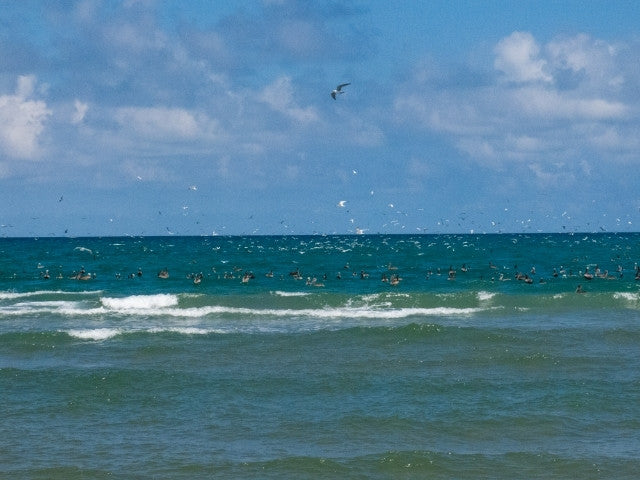

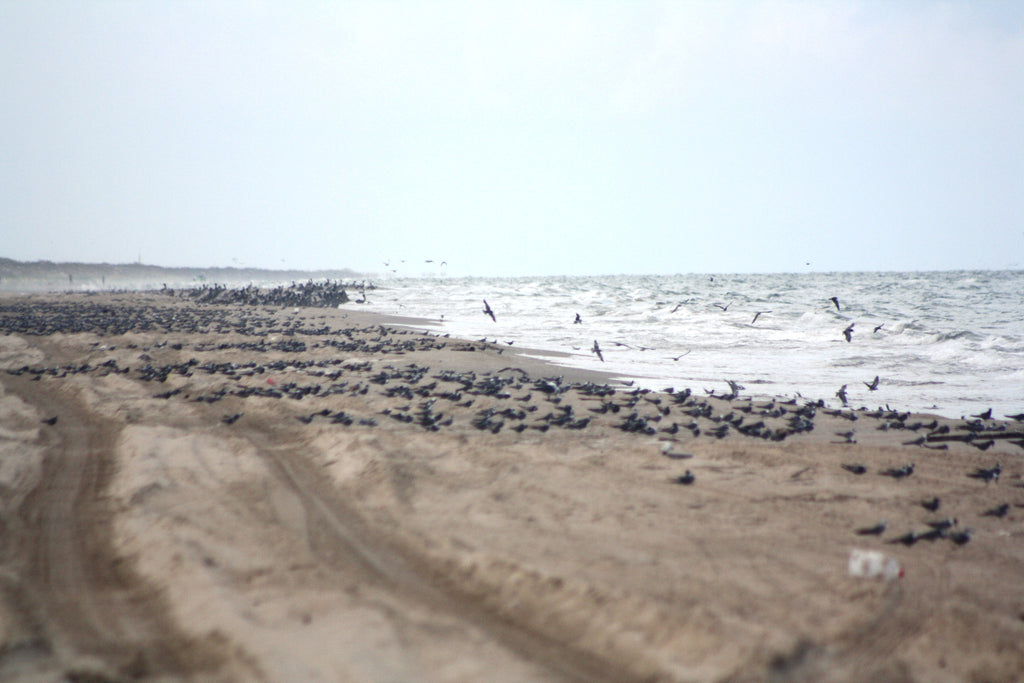

 Fishing was excellent this morning with trout caught on top waters until the wind shifted out of the east around 10 and it was over.
  Birds observed: Black Terns Sandwich Tern Royal Tern Caspian Tern Curlew Ruddy Turnstone Sanderling Willet Laughing Gull Herring Gull Black Bellied Plover Blue Herron Willet Grackle And Caracara
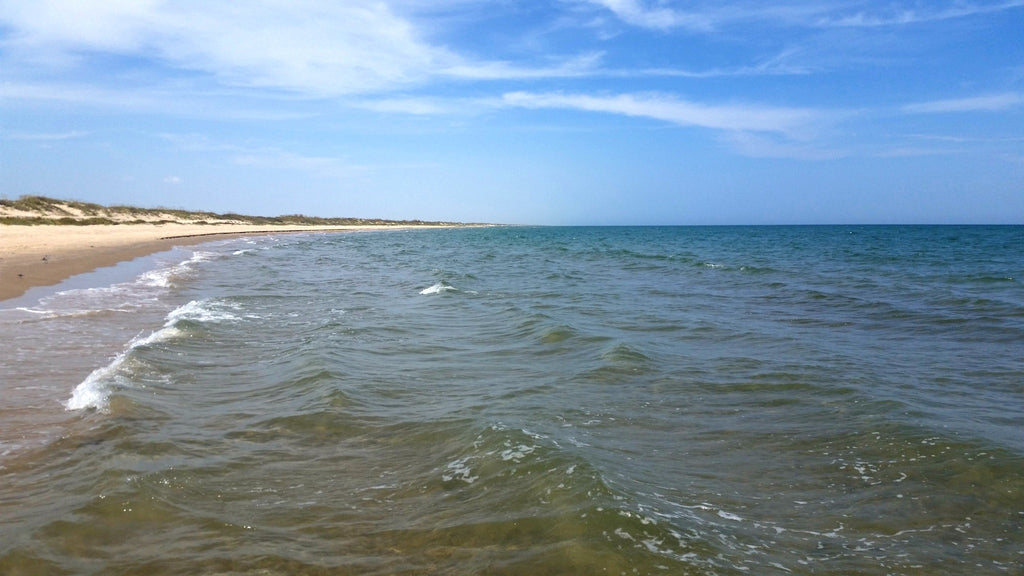
 Mullet were present in large numbers in some areas but were present in varying numbers the entire length of the beach. One very large shoal of Anchovies were spotted far offshore of the 39 mi. beach with a very large number of fishing eating birds working them. The early morning surf was glassed off with lite WNW winds. Around 11:00 the wind swapped around to ESE and blew 10-15 mph. Driving is great North of the 39 mile and South of there areas of soft sand were encountered frequently. Blue crabs were abundant in the surf South of the 30 mi.
  The only fish we know of being caught were Whiting, Shark pups and Skipjacks. Fishing was very slow. Probably due to the West wind in the a.m. Birds observed included the first Black-bellied Plovers returning from nesting, 1 Spotted Sandpiper, scattered “peep” Sandpipers and small Plover, Wilson’s Plover, 2 White-tailed Hawks, 3 Caracara, 23 Dark Ibis, 4 Black Skimmers, 2 Cattle Egrets, 1 Golden-crowned Night Heron, Ruddy Turnstones, Willets and Sanderlings. Thousands of Black Terns remained along with good numbers of Caspian, Royal, Sandwich, Foresters, and Least Terns. Laughing Gulls were present in good numbers as were Brown Pelicans, occasional Great Blue Herons and Long-Billed Curlews. Here's a video from the North Mansfield Jetty.